
Industrial Flooring Solutions for Factories and Warehouses in Ahmedabad
- Home
- /
- Industrial Flooring Solutions for Factories and Warehouses in Ahmedabad
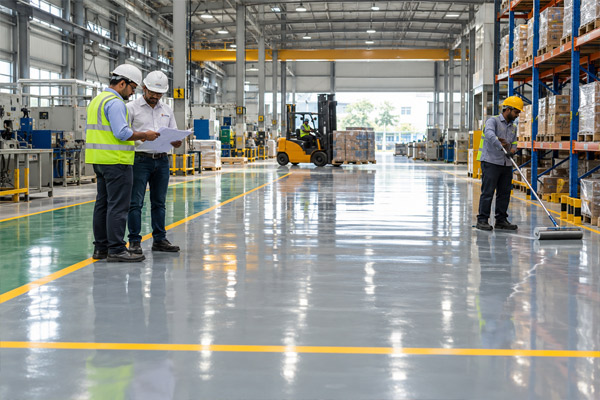
Industrial Flooring Solutions for Factories and Warehouses in Ahmedabad
The floor of a factory or warehouse carries much more responsibility than it appears. It has to handle machinery, forklifts, heavy loads, foot traffic, chemicals, oil, dust, and daily movement without getting damaged too quickly.
For this reason, regular flooring is often not enough for industrial environments. A proper Industrial Flooring Service helps create a stronger, safer, easier-to-maintain surface that can support daily business operations.
For factories and warehouses in Ahmedabad, the right flooring solution should be selected according to load conditions, movement, chemical exposure, moisture, and the type of work carried out at the site. This guide explains how industrial flooring works, where it is used, and what businesses should check before choosing a flooring contractor.
What Is Industrial Flooring
Industrial flooring is a specially designed floor system used in factories, warehouses, manufacturing units, workshops, processing plants, and other commercial or industrial areas.
Unlike normal residential flooring, industrial floors are designed to handle demanding conditions such as:
- Heavy machinery
- Forklift movement
- Continuous foot traffic
- Material handling
- Oil and chemical spills
- Surface abrasion
- Moisture exposure
- Impact from tools or materials
- Frequent cleaning
The type of flooring required depends on how the area is used and what kind of stress the floor experiences every day.
How to Choose Industrial Flooring for a Factory
The best industrial floor is not always the most expensive one. It is the one that suits the actual working condition of the site.
Before selecting an Industrial Flooring Service in Ahmedabad, consider the following factors.
Load on the Floor
The flooring should be able to handle the weight of machinery, storage racks, vehicles, and materials used in the area.
Traffic Level
A warehouse with regular forklift movement will have different flooring requirements from a low-traffic utility room.
Chemical Exposure
Some factory areas may come in contact with chemicals, oils, cleaning agents, or other substances. Flooring should be selected accordingly.
Surface Condition
Existing cracks, damaged concrete, weak areas, uneven surfaces, or moisture problems may need repair before the final flooring system is applied.
Cleaning Requirements
Food, pharmaceutical, engineering, and other industries may have different hygiene and cleaning requirements. The floor should support regular cleaning and maintenance.
Why Factories and Warehouses Need Industrial Flooring
A damaged industrial floor can affect more than the appearance of a workplace.
Cracks, uneven surfaces, dust generation, peeling coatings, and damaged joints can create safety issues and make material movement difficult. Over time, these problems can also increase maintenance requirements.
A professionally installed industrial flooring system can help improve:
- Surface strength
- Load resistance
- Workplace safety
- Cleanliness
- Ease of maintenance
- Resistance to chemicals and oil
- Movement of forklifts and trolleys
- Overall floor life
For businesses operating in busy industrial environments, the floor should support the work rather than become a repeated maintenance problem.
Which Areas Need Industrial Flooring
Industrial flooring can be used in many types of facilities.
Common applications include:
Manufacturing Units
Manufacturing floors may need to support machines, raw materials, workers, and moving equipment. The selected flooring system should match the operating conditions of the production area.
Warehouses
Warehouse floors often face continuous movement of pallets, forklifts, hand trolleys, and stored materials. A smooth and durable surface can support safer material handling.
Workshops
Mechanical and engineering workshops may experience oil, grease, tools, equipment movement, and impact. Flooring should be selected with these conditions in mind.
Factories
Different sections of a factory may require different flooring solutions. Production areas, utility rooms, loading sections, and storage areas may not have the same requirements.
Commercial Buildings
Industrial-grade flooring can also be suitable for selected commercial spaces where heavy traffic, durability, and easy maintenance are important.
Why Surface Preparation Is Important
Surface preparation is one of the most important stages of industrial flooring installation.
Even a good-quality flooring material may not perform properly if it is applied over a weak, dusty, oily, damp, or damaged surface.
Before installation, the floor may need:
- Cleaning
- Grinding
- Crack repair
- Joint treatment
- Removal of loose material
- Oil and grease cleaning
- Surface levelling
- Moisture assessment
Proper preparation can improve bonding and help the flooring system perform more effectively over time.
Common Industrial Flooring Problems
Industrial floors can develop several types of damage if the surface is not suitable for the working conditions.
Common problems include:
- Cracks
- Uneven surfaces
- Dusting
- Chipping
- Peeling coatings
- Damaged joints
- Oil stains
- Chemical damage
- Water accumulation
- Surface wear from forklift movement
If these issues are ignored, the damaged area may gradually become larger and more difficult to maintain.
Industrial Flooring in Ahmedabad for Different Industries
Ahmedabad has a wide range of manufacturing, engineering, textile, pharmaceutical, chemical, packaging, food processing, and warehousing facilities.
Each industry can have different flooring needs.
For example, an engineering unit may need flooring that handles machinery and oil, while a pharmaceutical or food-processing facility may give more importance to hygiene and ease of cleaning.
This is why Industrial Flooring Solutions in Ahmedabad should be selected according to actual site use rather than applying the same flooring system to every industry.
Industrial Flooring Solutions for Warehouses
Warehouse flooring should support smooth and continuous movement.
Forklifts, pallets, hand trucks, and storage racks can place repeated pressure on the floor. Uneven or damaged surfaces may slow down movement and increase wear on equipment.
A suitable warehouse flooring system should focus on:
- Flatness
- Durability
- Load resistance
- Abrasion resistance
- Easy cleaning
- Reduced dust
- Safe movement
The exact solution should be decided after checking the warehouse layout and operating conditions.
How Long Does Industrial Flooring Last
There is no fixed lifespan for every industrial floor.
Its durability depends on several factors, including:
- Quality of surface preparation
- Flooring material used
- Installation quality
- Load conditions
- Forklift movement
- Chemical exposure
- Cleaning methods
- Moisture conditions
- Regular maintenance
A floor designed correctly for the site generally performs better than a flooring system selected only on price.
Conclusion
Choosing the right industrial flooring solution is important for the long-term performance of factories and warehouses.
The best flooring system should match the working environment, load, traffic, chemical exposure, cleaning requirements, and existing floor condition.
Before selecting a contractor, focus on proper inspection, surface preparation, material suitability, installation quality, and maintenance requirements.
A well-planned industrial floor can help create a safer, stronger, cleaner, and more efficient working environment for your business.
Frequently Asked Questions
Which flooring is best for factories?
The best flooring depends on machine load, traffic, chemical exposure, surface condition, and the type of production activity. A site inspection is recommended before selecting a flooring system.
What type of flooring is suitable for warehouses?
Warehouse flooring should generally be durable, smooth, abrasion-resistant, easy to clean, and suitable for forklift and pallet movement.
Why is industrial flooring better than regular flooring?
Industrial flooring is designed for heavier loads, continuous traffic, machinery, impact, and demanding working conditions that normal flooring may not be able to handle effectively.
How much does industrial flooring cost in Ahmedabad?
The cost depends on floor area, surface condition, repair requirements, flooring material, thickness, and the type of application. A site inspection is usually required for an accurate quotation.
How long does industrial flooring take to install?
Installation time depends on the floor size, surface preparation, repair work, flooring system, curing period, and operating conditions at the site.
Can industrial flooring be installed over an old floor?
In many cases, yes, but the existing surface must first be checked for cracks, loose material, oil, moisture, and structural damage. Proper preparation is important before installation.
How long does industrial flooring last?
Its lifespan depends on material quality, installation, traffic, machine loads, chemicals, cleaning, and maintenance. Correctly selected and properly installed flooring can provide long-term performance.
Is industrial flooring suitable for forklift movement?
Yes, suitable industrial flooring can be designed for areas with forklift and material-handling movement. The floor system should be selected according to expected load and traffic.
Can damaged industrial flooring be repaired?
Minor cracks, joints, and surface damage may often be repaired. More serious or widespread damage may require resurfacing or a complete flooring treatment.
Why does industrial flooring fail early?
Early failure can happen because of poor surface preparation, moisture, unsuitable material selection, incorrect application, excessive loading, or chemical exposure beyond the flooring system’s capability.