Roof Leakage Repair in Ahmedabad
- Home
- /
- Roof Leakage Repair in Ahmedabad
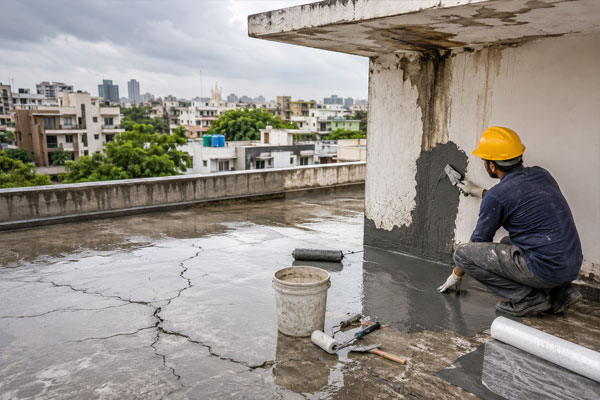
Professional Roof Leakage Repair Solutions in Ahmedabad
A small water stain on the ceiling can quickly become a serious problem if the source of leakage is not repaired. Roof cracks, damaged waterproofing, blocked drains, weak joints and poor terrace slope can allow rainwater to enter the building and damage walls, ceilings and interior finishes.
For property owners searching for Roof Leakage Repair in Ahmedabad, the first step should not be applying another coat over the wet area. The actual source of water entry must be identified first. Roof leakage may begin at one point but become visible somewhere else inside the building.
Dhyey Waterproofers provides roof repairing and waterproofing solutions in Ahmedabad for residential, commercial and industrial properties. A proper roof repair process should include inspection, crack treatment, surface preparation, drainage checking and a suitable waterproofing method based on the condition of the terrace or roof.
This guide explains the most common causes of roof leakage, practical repair solutions and the warning signs that indicate professional help may be required.
Quick Answer: How Do You Repair a Leaking Roof?
A leaking roof should be repaired by first finding the source of water entry and then treating the damaged area properly.
The basic process may include:
- Inspecting the complete terrace or roof
- Finding visible and hidden cracks
- Checking wall-to-roof joints
- Inspecting pipe openings
- Cleaning roof drains
- Removing loose surface material
- Repairing cracks and damaged joints
- Correcting water-stagnation areas where required
- Applying a suitable waterproofing system
- Checking the repaired area after completion
Simply applying waterproof paint over a crack may not solve the problem if the cause remains untreated.
Why Roof Leakage Should Not Be Ignored
Roof leakage usually becomes worse with repeated exposure to water.
Water entering through the roof can affect:
- Ceiling paint
- Wall plaster
- Electrical areas
- Furniture
- False ceilings
- Interior finishes
- Concrete surfaces
- Stored materials
In commercial and industrial buildings, leakage can also disturb daily operations.
A small repair completed at the right time may help prevent a larger restoration project later.
What Are the Most Common Causes of Roof Leakage?
There is rarely one single reason behind every leaking terrace.
Common causes include:
- Roof cracks
- Failed waterproofing
- Water stagnation
- Blocked drainage outlets
- Pipe-joint leakage
- Weak wall and terrace junctions
- Damaged tiles or China mosaic
- Old repair patches
- Plumbing leakage
- Surface deterioration
The correct repair depends on the exact cause.
Cracks in the Roof or Terrace Surface
Cracks are one of the most common reasons for terrace leakage.
They may develop because of:
- Surface movement
- Ageing
- Temperature changes
- Weak previous repairs
- Construction joints
- Surface deterioration
Even a small visible crack may allow rainwater to enter.
Best Solution
The crack should first be cleaned and inspected.
Depending on the type and condition of the crack, the repair may involve:
- Crack filling
- Joint treatment
- Repair mortar
- Sealant application
- Waterproof treatment over the repaired area
Do not cover active cracks without treating them first.
Old or Damaged Waterproofing
Waterproofing systems do not remain in perfect condition forever.
An old terrace may show:
- Peeling
- Cracks
- Blisters
- Loose coating
- Damaged joints
- Exposed surface areas
Applying a new layer directly over weak waterproofing may provide only temporary results.
Better Solution
A professional should inspect the condition of the existing waterproofing.
Loose or damaged areas may need to be removed or repaired before a new waterproof layer is applied.
Good surface preparation is as important as the waterproofing material itself.
Water Stagnation on the Terrace
After rain, water should move toward the drainage outlet instead of remaining on the terrace for long periods.
Water stagnation may happen because of:
- Poor roof slope
- Uneven surface
- Blocked outlet
- Depressed areas
- Incorrect previous repairs
Repeated water collection increases the chance of seepage through weak areas.
Best Solution
The repair may require:
- Cleaning drainage points
- Identifying low areas
- Repairing uneven surfaces
- Improving drainage movement
- Waterproofing vulnerable zones
The exact method depends on the roof condition.
Blocked Terrace Drainage
Leaves, dirt, construction waste and other material can block terrace outlets.
When drainage is blocked, rainwater may collect around:
- Drain outlets
- Parapet walls
- Pipe penetrations
- Surface cracks
This can increase leakage risk.
Simple Prevention
Regularly clean:
- Roof drains
- Rainwater outlets
- Gutters
- Drain covers
This is especially useful before the rainy season.
Roof Repair vs Waterproofing: What Is the Difference?
These terms are related but not exactly the same.
| Roof Repair | Waterproofing |
|---|---|
| Treats damaged areas | Helps prevent water penetration |
| May include crack repair | May cover larger roof area |
| Can include surface restoration | Creates a protective waterproof layer |
| Solves existing physical damage | Helps protect repaired surfaces |
| Often completed before waterproofing | Usually applied after surface preparation |
In many cases, both are required.
When Is Only Crack Repair Enough?
There is rarely one single reason behind every leaking terrace.
Common causes include:
Localized crack repair may be suitable when:
- Damage is limited
- Waterproofing is otherwise healthy
- The leak source is clearly identified
- The surrounding surface is strong
A full waterproofing treatment may be more suitable when:
- Cracks are widespread
- The existing layer has failed
- Leakage appears at multiple locations
- The terrace is old
- Previous patch repairs keep failing
A site inspection is the best way to decide.
Best Roof Leakage Solutions for Different Problems
| Roof Problem | Possible Solution |
|---|---|
| Small Surface Crack | Crack treatment and sealing |
| Open Joint | Joint repair and waterproof sealing |
| Damaged Terrace Surface | Surface repair and waterproofing |
| Blocked Drain | Cleaning and drainage correction |
| Water Stagnation | Slope/low-area correction |
| Pipe Joint Leakage | Joint sealing and waterproof treatment |
| Weak Parapet Junction | Corner/junction repair |
| Failed Waterproof Layer | Surface preparation and new waterproofing system |
| Loose Mosaic/Tiles | Repair or replacement based on condition |
The exact method should be chosen after inspection.
Why Temporary Roof Leakage Fixes Often Fail
People sometimes try quick solutions such as:
- Cement over cracks
- Paint over damp areas
- Random sealant application
- Plastic sheet covering
- Waterproof coating without preparation
These may hide the problem but not solve it.
Example
If water enters through a parapet crack but appears on the ceiling two metres away, repairing only the ceiling will not stop the water.
The source must be treated.
Signs You Need Professional Roof Repairing Service
Call a professional if you notice:
- Water dripping from ceiling
- Repeated damp patches
- Peeling wall paint
- Cracked terrace surface
- Loose plaster
- Water collecting on the roof
- Leakage around pipe joints
- Damp parapet walls
- Failed old waterproofing
- Leakage returning after DIY repair
Repeated leakage is a strong sign that the source needs proper diagnosis.
Roof Leakage Repair Before Monsoon
The best time to inspect a terrace is before heavy rain exposes existing weak areas.
Before monsoon, check:
- Surface cracks
- Drain outlets
- Pipe joints
- Parapet walls
- Loose tiles
- Old waterproofing
- Water tank areas
- Previous repair patches
Repairing visible problems early can reduce the risk of indoor leakage during rain.
Terrace Leakage Repair for Housing Societies
Housing societies may have larger terrace areas with:
- Multiple drainage points
- Water tanks
- Solar systems
- Pipe connections
- Common service areas
The repair contractor should inspect the full terrace rather than treating only the area above one affected flat.
Water can travel beneath layers before appearing indoors.
Roof Repair for Commercial Buildings
Commercial properties need fast and planned leakage repairs because water can affect:
- Offices
- Retail spaces
- Stored products
- Ceiling systems
- Electrical equipment
- Customer areas
Repairs should be planned to reduce disturbance to normal business operations.
Industrial Roof Leakage Repair in Ahmedabad
Factories and warehouses may experience roof leakage around:
- RCC roof areas
- Sheet-roof joints
- Drainage lines
- Service openings
- Expansion joints
- Wall junctions
Industrial leaks can affect:
- Machinery
- Raw materials
- Finished products
- Electrical panels
- Storage racks
- Production areas
Industrial sites should arrange inspection as soon as recurring leakage is noticed.
Roof Leakage Repair for Residential Properties in Ahmedabad
Residential roof leakage commonly affects:
- Bungalows
- Flats
- Housing societies
- Row houses
- Old homes
- New construction
Typical problem areas include:
- Terraces
- Water tank bases
- Bathrooms below terraces
- Parapet walls
- Drain pipes
Homeowners should inspect leakage early instead of waiting until paint and plaster become heavily damaged.
How Can You Reduce Future Roof Leakage?
Regular maintenance can help identify problems earlier.
Keep Roof Drains Clean
Do not allow leaves and dirt to block outlets.
Check Cracks
Small cracks should be inspected before they become larger.
Inspect Pipe Joints
Watch for gaps around new or old service pipes.
Check Water Tank Areas
Leaks near tanks can be mistaken for rain leakage.
Avoid Random Drilling
New fixtures can damage existing waterproofing if holes are not properly sealed.
Inspect Before Monsoon
A yearly visual check can identify obvious weak areas before heavy rain.
Final Thoughts
Roof leakage is rarely solved by painting over the damp spot inside the building.
A better approach is:
Find the Source → Repair Cracks and Damage → Correct Drainage Problems → Prepare the Surface → Apply Suitable Waterproofing → Inspect the Result
Common roof leakage causes include cracks, damaged waterproofing, pipe joints, blocked drains, weak parapet junctions and water stagnation.
If leakage continues after temporary repairs, arrange a professional inspection rather than applying another patch.
For property owners searching for Roof Leakage Repair in Ahmedabad, Dhyey Waterproofers provides roof repairing and waterproofing solutions for residential, commercial and industrial properties.
Early repair can help protect the roof, interiors and day-to-day use of the property before the leakage becomes more difficult to manage.
FAQs
What is the most common cause of roof leakage?
Common causes include terrace cracks, failed waterproofing, blocked drains, poor slope, pipe-joint gaps and weak roof-to-wall junctions.
How do I find the source of a roof leak?
Inspect cracks, drainage outlets, pipe openings, parapet joints and damaged waterproofing. The visible damp spot inside the building may not be directly below the actual leakage source.
Can roof cracks cause water leakage?
Yes. Open or damaged cracks can allow rainwater to enter the roof layers and appear as dampness or dripping inside the building.
Can waterproofing be applied directly over a leaking roof?
The roof should first be inspected and damaged areas repaired. Applying waterproofing over loose material or untreated cracks may not solve the cause of leakage.
Why does my terrace hold water after rain?
Water stagnation may occur because of poor slope, low areas or blocked drainage outlets. The cause should be corrected before or during waterproofing work.
What is the difference between roof repair and waterproofing?
Roof repair treats physical damage such as cracks, joints and weak surfaces. Waterproofing provides protection against water penetration. Many leaking roofs need both.
Why is my roof leaking even after previous waterproofing?
Possible reasons include untreated cracks, poor surface preparation, damaged joints, drainage issues, ageing waterproofing or water entering from a different location.
Should roof leakage be repaired before monsoon?
Yes. Inspecting and repairing cracks, drains and damaged waterproofing before heavy rainfall can reduce the risk of leakage during monsoon.

Established as a Proprietorship Firm in the year 2025, we “Dhyey Water Proofers” are a leading Service Provider of a wide Range of Waterproofing Service, Flooring Service..
Services
Get In Touch
- Purin10parikh@gmail.com
- +91 90670 78751
- Uttamnagar, Maninagar, Ahmedabad-380008
Request A Quote
© 2026: Dhyey Water Proofers.
- Powered By :
- Kaival Infotech